

LEARN / PLANT LIBRARY / MARIGOLD
Marigold
Tagetes spp.
Marigolds bring warm colour, distinctive fragrance, and a long flowering season to beds and containers. Their flowers range from small, open blooms to densely layered pom-poms, with varieties suited to edging paths, filling pots, or adding height to a summer border.
AT A GLANCE
LIGHT
WATER
HUMIDITY
SOIL
LIFE CYCLE
IN ZONE 3A
BLOOM
Full Sun
Let soil dry slightly
No special requirements
Well-drained
Annual
Annual
Summer to frost
PET SAFETY
May cause mild stomach upset or skin irritation.
ON THIS PAGE: Meet the Plant Care Seeds Troubleshooting Herbalism History
01
Meet the Marigold
Marigolds belong to Tagetes, a genus in the daisy family. Although the genus includes annuals and perennials, the three familiar bedding species covered here are annuals.
Their leaves are divided into narrow leaflets, often with toothed edges. Both foliage and flowers can be aromatic, particularly when brushed or crushed. Flower heads may be single, semi-double, or densely double.
COMMON SPECIES & VARIETIES
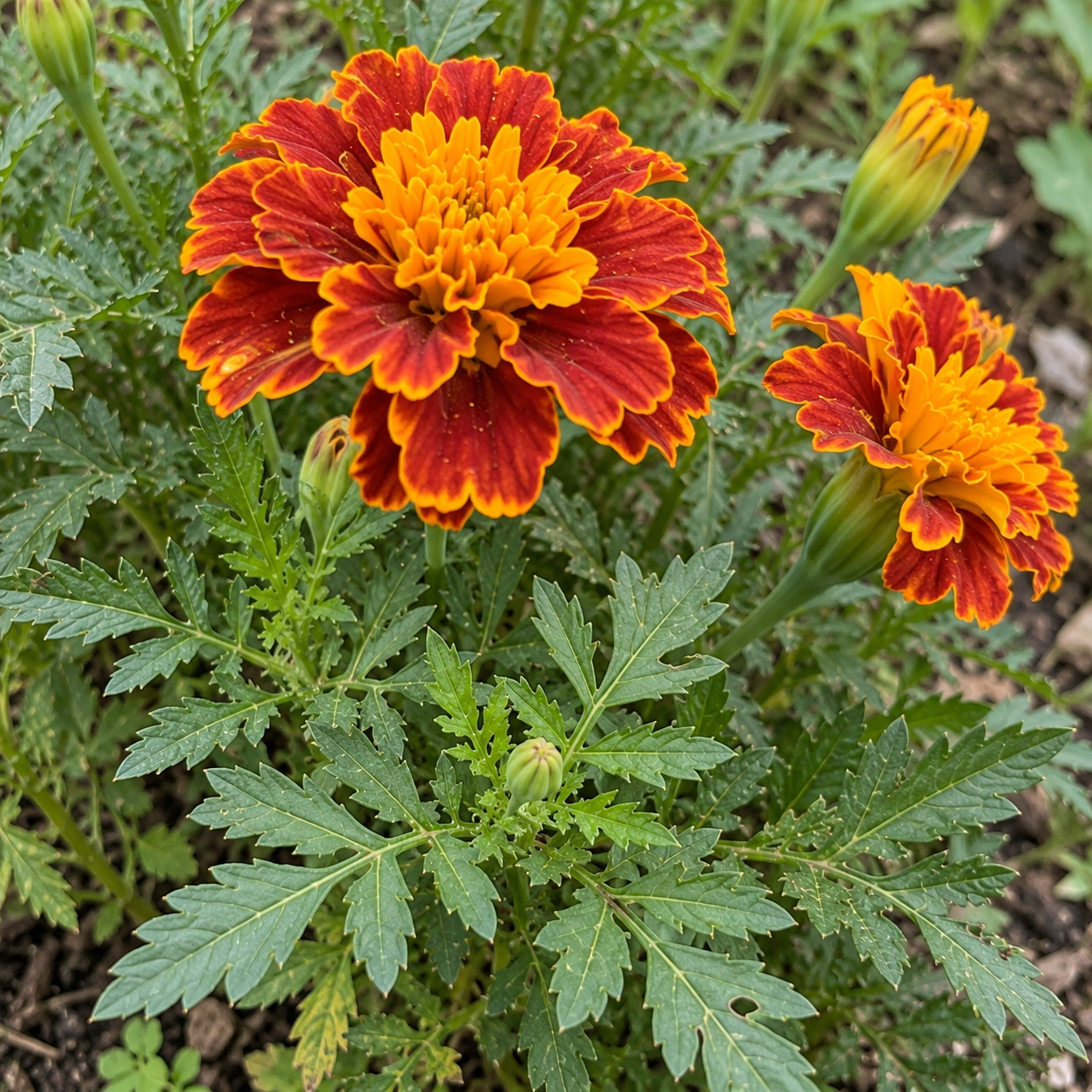
French Marigold
Tagetes patula
Usually compact and branching, with smaller flowers in yellow, orange, russet, and combinations
of these colours.
ORIGINS & CULTIVATION
The familiar French and African marigolds originate in the Americas, despite their common names. Tagetes erecta, for example, has a native range extending from Mexico to Guatemala.
These plants have travelled widely through cultivation, becoming familiar in gardens and cultural celebrations far beyond their native range.
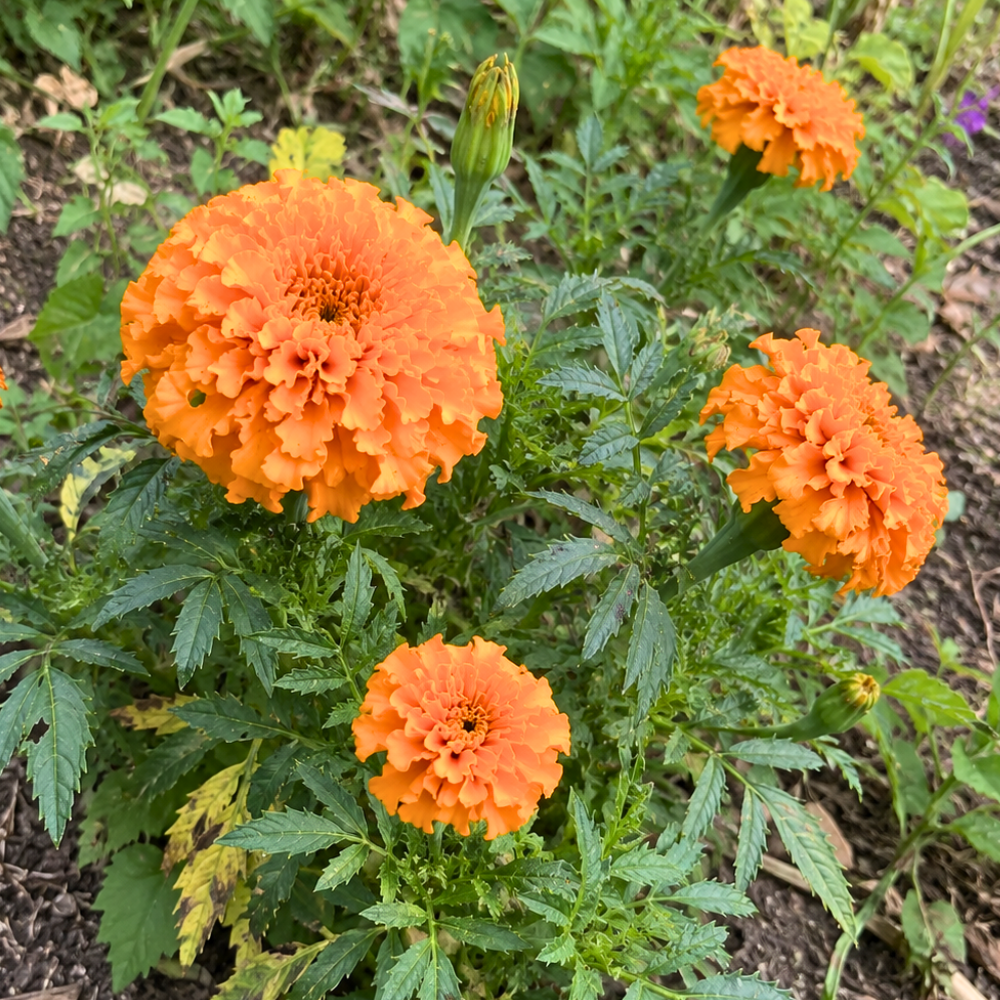
African Marigold
Tagetes erecta
Often larger, with substantial rounded flowers. Dwarf cultivars are also available.
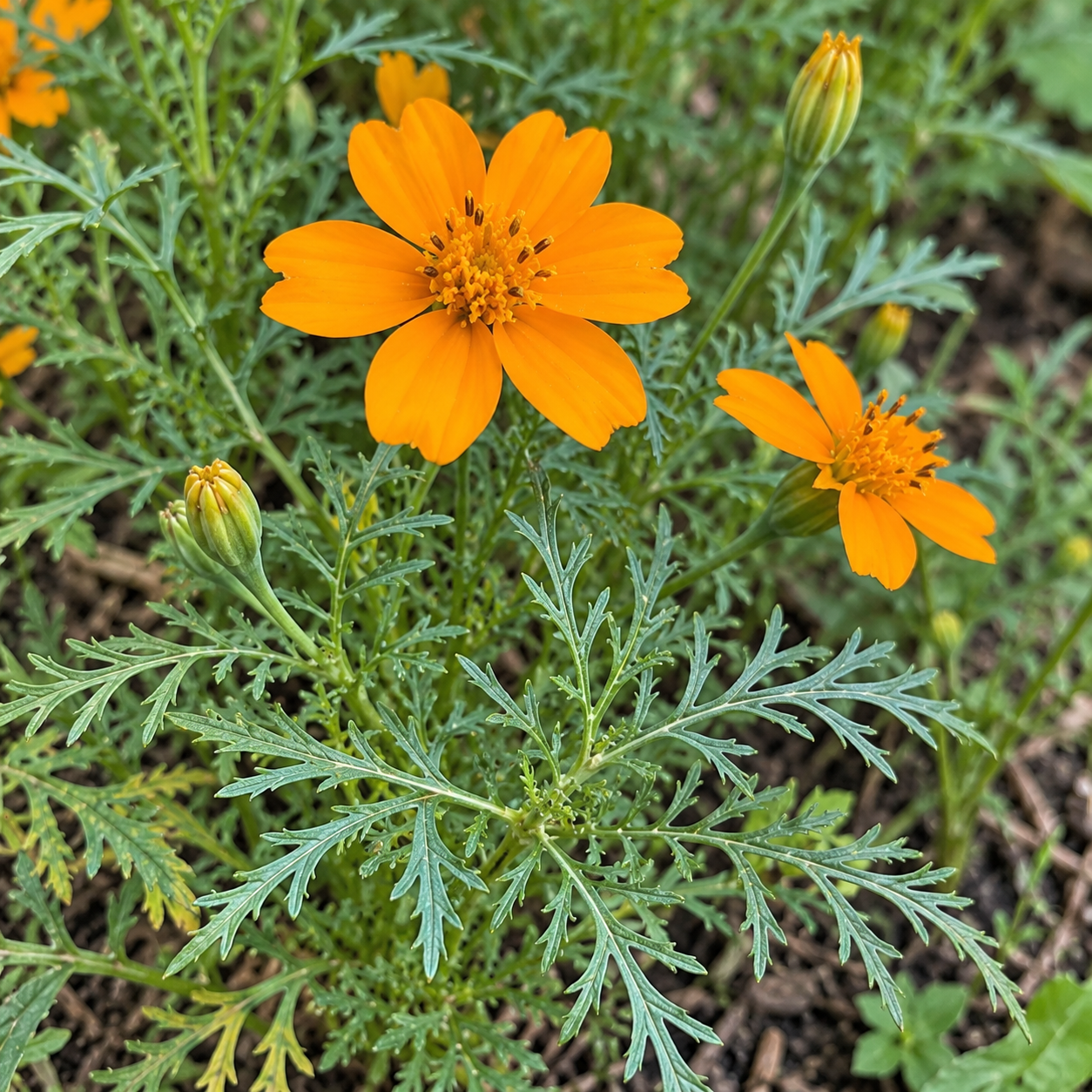
Signet Marigold
Tagetes tenuifolia
Fine foliage and small, open flowers; often a citrus-like fragrance.
Names such as “African” describe a garden group with multiple varieties, and are not a guarantee of height. Always check the cultivar’s mature dimensions.
02
Growing & Plant Care
Choose a sunny position with enough room for the mature plant. Marigolds may grow in partial sun, but flowering is generally better in full sun.
LIGHT & TEMPERATURE
Use a moderate approach. Excess nitrogen can produce abundant foliage with fewer flowers. Follow fertilizer directions and consider the plant’s condition before increasing feeding.
FERTILIZER
Water thoroughly after planting and keep the root zone evenly moist while plants establish. Once established, allow some drying between waterings.
SOIL & DRAINAGE
Marigolds grow in a range of soils provided drainage is adequate. Persistent wetness is more troublesome than occasional drying.
WATERING
Space plants so foliage can dry, and remove deteriorating blooms. Dense flowers are particularly vulnerable to Botrytis during prolonged damp weather.
HUMIDITY & AIRFLOW
Remove faded flowers to keep plants tidy. African marigolds benefit from deadheading, while many French varieties continue blooming without it. Signet marigolds often shed spent flowers readily.
MAINTENANCE