 Image 1 of 1
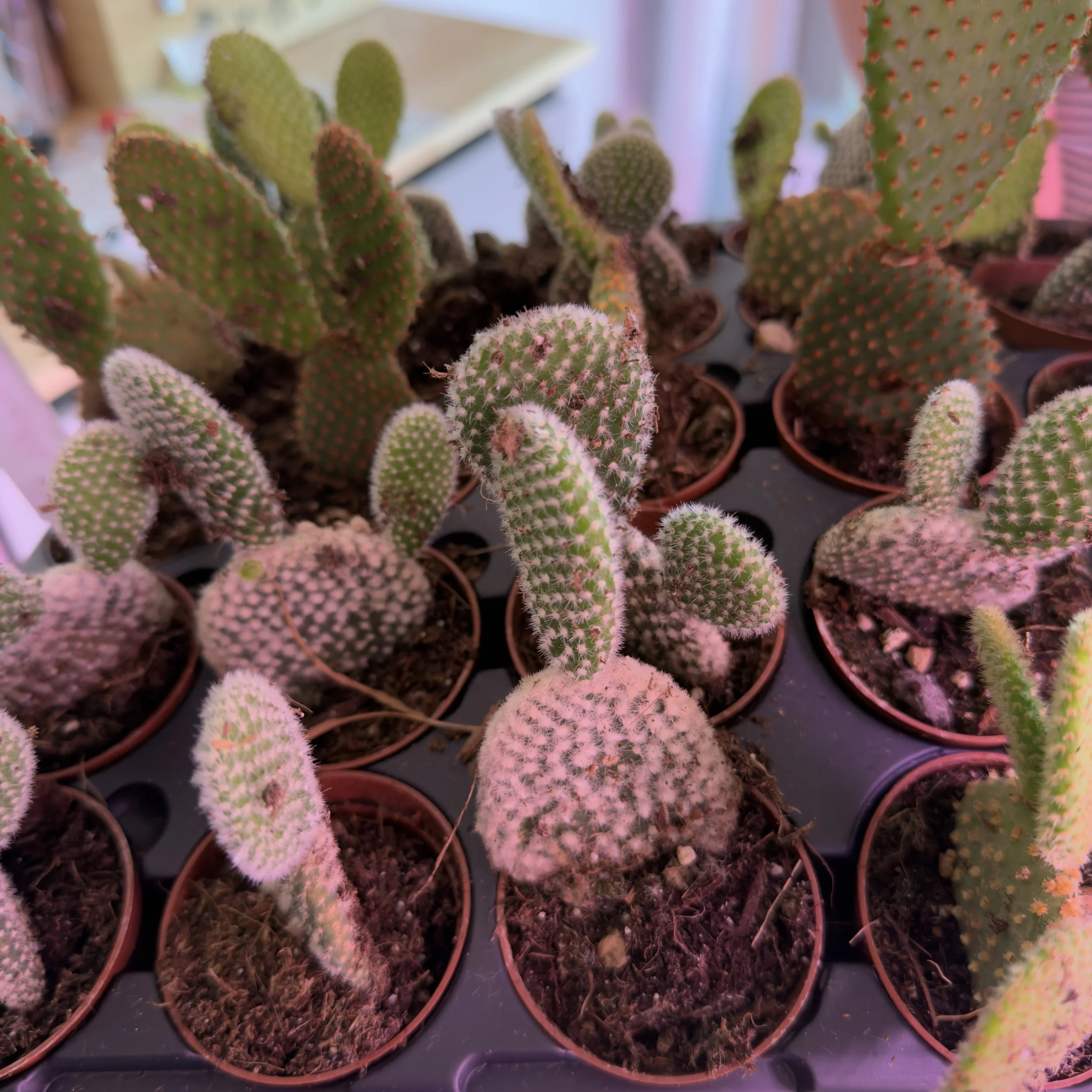
Bunny Ear Cactus
$5.00
Get notified by email when this product is in stock.
Family: Cactaceae
Common Names: Bunny Ears, Polka-dot, Angel’s-Wings, Rabbit
Plant Type: Perennial cactus
Best For: Sunny windowsills and other bright, dry spaces
Pet Friendly: Non-toxic, but not pet-safe to touch due to bristles.*
Available Size: 2" nursery pots
Bunny Ear Cactus is a distinctive little cactus known for its flat, oval pads that often grow in pairs, creating its characteristic rabbit-ear shape. Instead of the large spines associated with many cacti, its pads are covered in clusters of tiny white or golden bristles called glochids.
Native to Mexico, Opuntia microdasys is adapted to bright, dry conditions and stores water in its fleshy pads. Its compact growth and minimal watering needs make it a relatively easy houseplant for a sunny spot, but those soft-looking dots are deceiving: the glochids detach easily and can become embedded in skin, so the plant should be handled carefully.
Light: Full sun to very bright light. Indoors, place near your brightest sunny window.
Water: Allow the soil to dry completely between waterings. Reduce watering significantly during winter.
Temperature: 18°C–29°C is a comfortable range during active growth.
Humidity: Prefers dry conditions and does not require additional humidity.
Bloom: Mature plants may produce soft yellow flowers in spring or summer, however it is uncommon.
Growth: Clusters of flattened pads and gradually develops a branching, shrubby shape as it matures.
Maintenance: Grow in a fast-draining cactus mix and avoid overwatering. Handle with thick gloves or tongs when moving or repotting to avoid contact with the fine glochids.
Plant appearance, bloom colour and size may vary.
Each plant is a living specimen and naturally unique.
* Bunny Ear Cactus is considered non-toxic to cats and dogs; however, its tiny barbed glochids can become embedded in the skin, mouth or eyes and cause injury. Keep out of reach of pets and contact your veterinarian if exposure occurs.