 Image 1 of 3
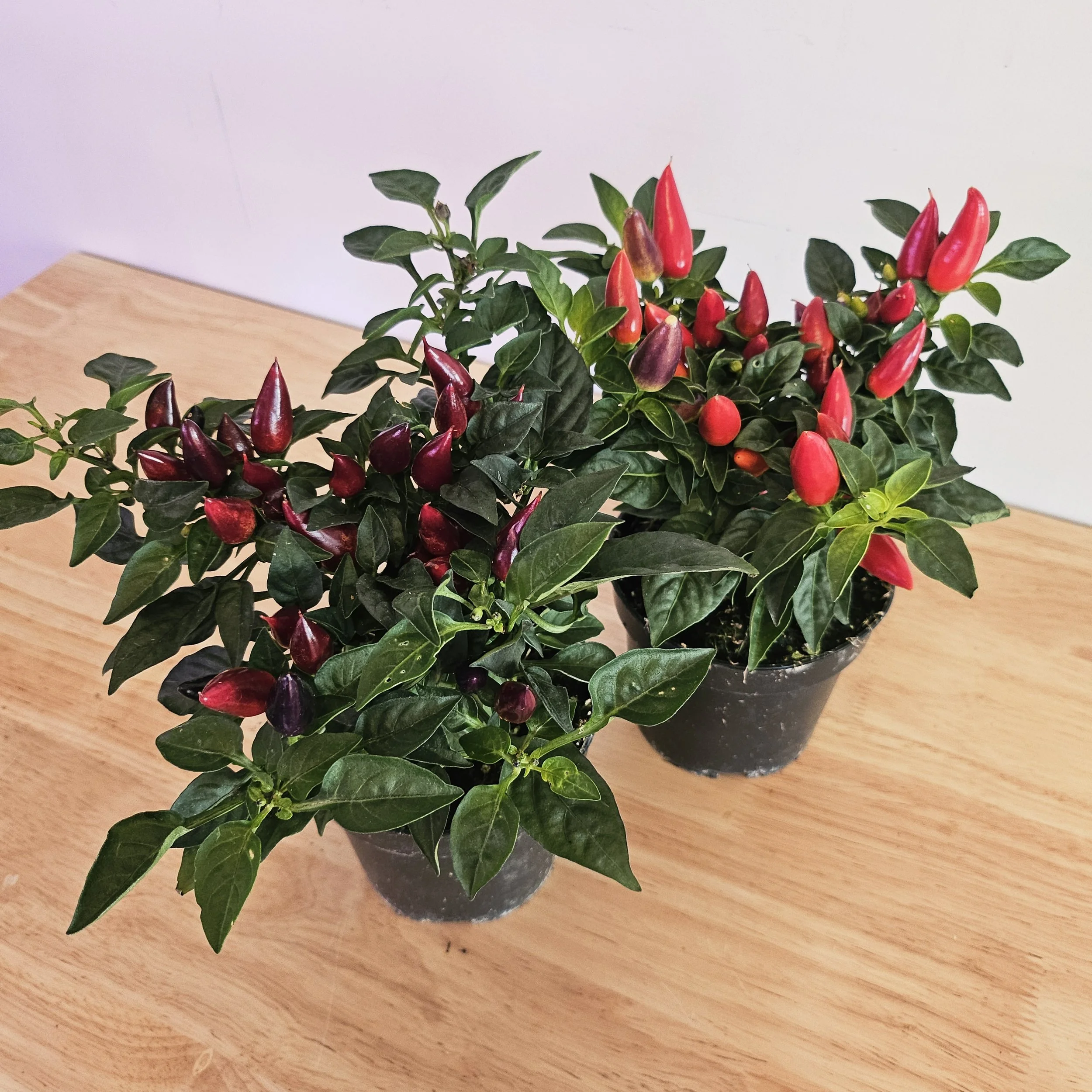 Image 2 of 3
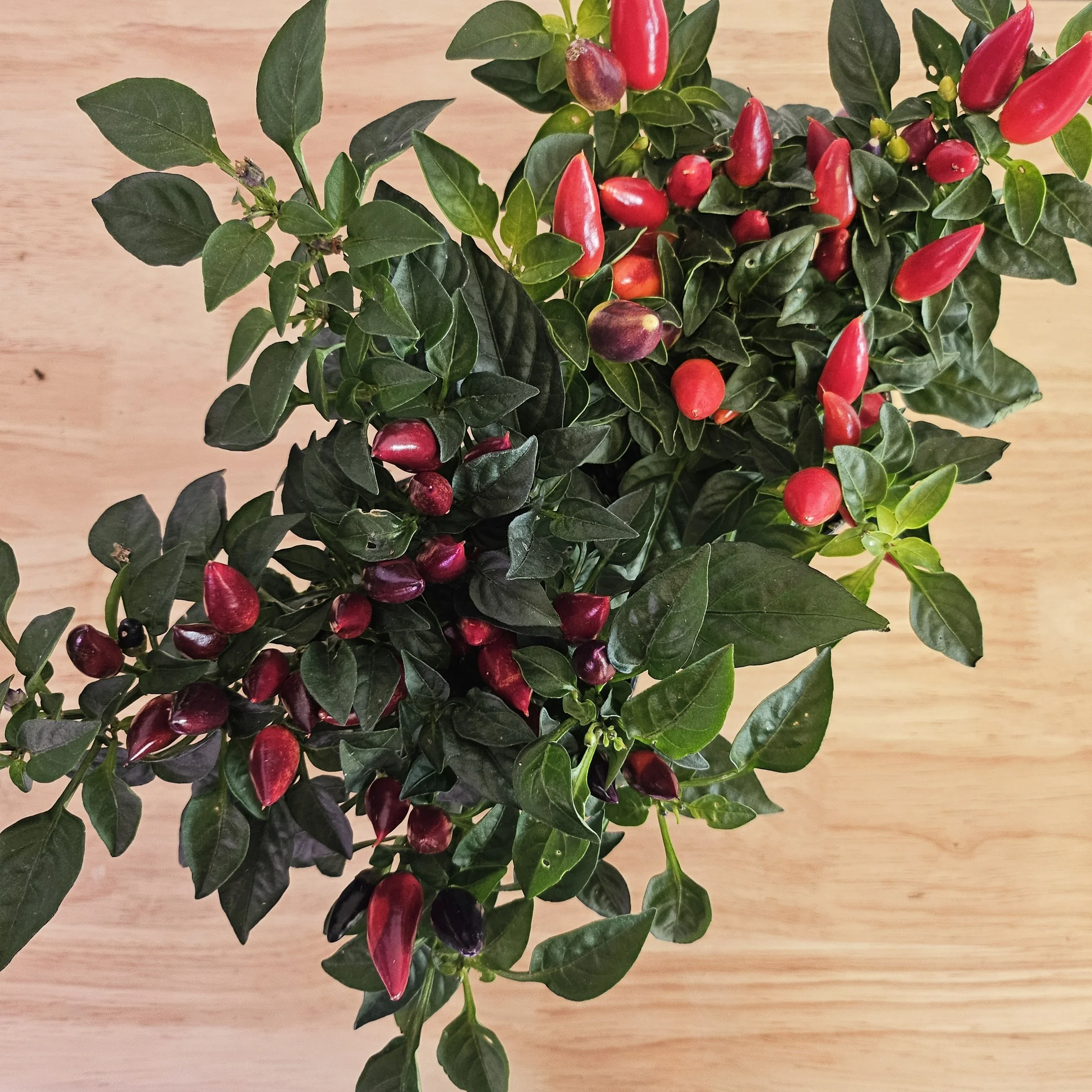 Image 3 of 3
Family: Solanaceae
Common Names: Ornamental Pepper, Ornamental Chili Pepper
Plant Type: Tender perennial, commonly grown as an annual
Best For: Sunny windows, patios, containers and colourful seasonal displays
Pet Friendly: No, may cause gastrointestinal upset and irritation if ingested by pets.*
Available Size: 4" nursery pots
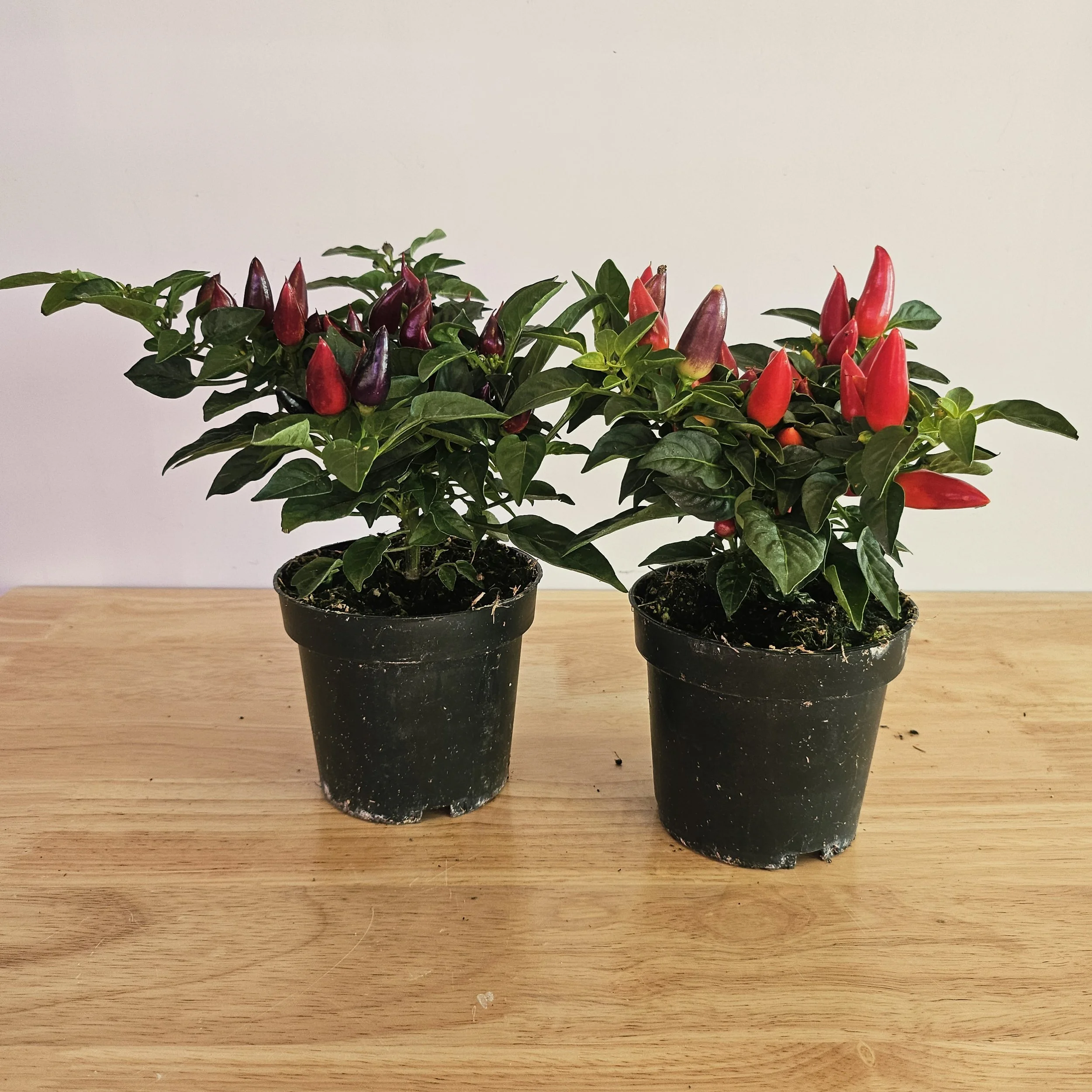
Ornamental Pepper Plants are compact, colourful plants grown for their abundant decorative fruits. Depending on the variety and stage of ripening, the peppers can appear in shades of green, purple, orange and brilliant red, with several colours often appearing on the same plant at once.
Capsicum annuum includes an enormous range of both culinary and ornamental peppers. Ornamental varieties are selected primarily for their compact growth and colourful fruit, making them particularly attractive in sunny windows, containers and seasonal displays. Although the fruits of many ornamental peppers are technically edible, plants sold specifically for ornamental use should be enjoyed as decorative plants unless they have been grown and labelled for culinary use.
Light: Bright light to full sun. Plenty of light encourages compact growth, flowering and fruit production.
Water: Water when the upper layer of soil begins to feel dry.
Temperature: 18°C–27°C is a comfortable growing range.
Humidity: Prefers low to moderate humidity with good air circulation.
Bloom: Fruits remain on the plant for an extended period and often change colour as they mature.
Growth: Compact and bushy, with branching stems carrying colourful fruits among or above the foliage.
Maintenance: Remove damaged foliage and spent fruit as needed. Consistent light and watering help maintain flowering and fruit production.
Plant appearance, bloom colour and size may vary.
Each plant is a living specimen and naturally unique.
* Ornamental Pepper is toxic and irritating to pets if ingested. Capsaicinoids in the fruit and compounds in the foliage can cause gastrointestinal irritation, including vomiting and diarrhea. Poisoning is not considered likely to be lethal, but contact your veterinarian if ingestion occurs.