

A Field Guide To Arabian Jasmine
Some plants catch your eye, others have scents that capture your attention long before you ever see them. Arabian jasmine is one of those plants.
Best known for its intensely fragrant white flowers, Arabian jasmine has been treasured for centuries in gardens, homes, ceremonies, perfumes, and teas around the world. Its sweet scent has made it one of the most beloved flowering plants in cultivation, while its elegant blooms continue to charm gardeners everywhere.
Here in Northern Alberta, Arabian jasmine can't spend the winter outdoors, but it makes a wonderful houseplant or patio companion throughout the warmer months. Given plenty of light and a little care, it rewards growers with beautiful blooms and an unforgettable fragrance.
Arabian jasmine is certainly a plant that always starts a conversation. People are often drawn in by the flowers, but it's the fragrance they remember long after they've walked away.
Let's take a closer look at one of the world's most cherished flowering plants.
Quick Care Guide
Just looking for the basics? Here's the short version.
Growing Information
Light: Full sun to partial shade
Water: Water when top begins to feel dry
Soil: Rich, well-draining potting mix
Temperature: Prefers 18°C–30°C
Planting: Keep indoor or grow outdoors during summer and bring indoors before frost
Bloom: Late spring through summer, with repeat blooms possible indoors
Life Cycle: Perennial in Zone 3 with overwintering or by keeping indoors
Pet Friendly: Some varieties of jasmine are considered incredibly toxic to pets, however Arabian jasmine is generally considered non-toxic and safe
Tip: Give vines or stems gentle support if needed, and avoid letting the pot sit in water.
Arabian jasmine is an excellent choice for sunny windows, patios, balconies, and anyone looking to add natural fragrance to their home or garden.
If you're looking for a deeper dive, keep reading below.
Growing Arabian Jasmine in Zone 3
Although Arabian jasmine is a tropical plant, it adapts surprisingly well to life indoors.
In Northern Alberta, most gardeners enjoy it outdoors during the warmer months before bringing it inside well before the first frost.
Sunlight
Arabian jasmine grows best in:
Bright, sunny locations
Four to six hours of direct sunlight each day
South or west facing windows indoors
Too little light often results in fewer flowers and slower growth.
Soil
Arabian jasmine prefers soil that is:
Rich in organic matter
Well-draining
Moisture-retentive without becoming soggy
Slightly acidic to neutral
A quality indoor potting mix with added perlite works well.
Watering
Arabian jasmine enjoys consistent moisture but dislikes sitting in wet soil.
For best results:
Water thoroughly when the surface begins to dry
Empty saucers after watering
Reduce watering slightly during winter when growth slows
Maintenance
Humidity
Like many tropical plants, Arabian jasmine appreciates moderate humidity.
If your home becomes especially dry during winter, grouping houseplants together or using a humidifier can help keep foliage healthy.
Fertilizing
Feed every two to four weeks during spring and summer using a balanced fertilizer formulated for flowering plants.
Reduce feeding during winter while growth naturally slows.
Pruning
Light pruning after flowering helps maintain a compact shape and encourages branching.
Removing spent flowers also encourages the plant to continue producing new blooms.
Overwintering
Arabian jasmine is not frost hardy. Bring plants indoors well before nighttime temperatures approach freezing.
Place them in the brightest location available and avoid cold drafts from windows or doors.
Arabian Jasmine in the Ecosystem
Arabian jasmine is often grown for its incredible fragrance, but its flowers also play an important role in supporting pollinators wherever it is grown outdoors.
Its blooms remind us that gardens can be experienced through scent just as much as colour.
Supporting Pollinators
When grown outdoors during the summer, Arabian jasmine attracts a variety of pollinating insects, including:
Bees
Butterflies
Hoverflies
Evening pollinators such as moths
Many jasmine flowers become even more fragrant as evening approaches, helping attract pollinators that rely more on scent than colour.
A Garden for the Senses
One of the easiest ways to create a welcoming garden isn't by planting more flowers but by planting fragrant ones!
Arabian jasmine encourages us to slow down, breathe deeply, and experience our gardens in a different way. A single plant near a doorway, patio, or favourite chair can completely transform the atmosphere of an outdoor space.
Gardens are meant to be experienced with all of our senses, and fragrance is one of nature's most memorable gifts.
Fragrance That Brings People Together
Scent has a remarkable way of connecting us to places and memories.
A blooming Arabian jasmine drifting through an open window or greeting visitors at the front door often becomes part of how we remember a home or garden.
Sometimes the strongest memories aren't made by what we see, but by what we smell.
Native Relatives
Arabian jasmine isn't native to Alberta, but it shows us that fragrance is an important part of many healthy ecosystems.
Closer to home, native plants such as wild bergamot, flowering currants, and sweet gale provide beautiful scents while supporting local pollinators and wildlife.
By combining fragrant ornamentals with native species, gardeners can create landscapes that delight the senses while contributing to biodiversity.
Growing with Nature
One of the things we love most about gardening is that it invites us to slow down and notice the little things.
Sometimes it's the sound of bees moving through the flowers, the warmth of the sun on your back and the scent of a single flower carried on a summer breeze.
Arabian jasmine reminds us that gardens are about more than what we see. They're places to pause, breathe deeply, and reconnect with the natural world in simple, meaningful ways.
For the Curious Gardener
One of our favourite things about plants is that there's always more to discover!
Here are a few fascinating facts, bits of history, and pieces of plant science that make Arabian jasmine even more interesting.
Is Arabian Jasmine Really From Arabia?
Surprisingly, probably not.
Despite its common name, Arabian jasmine is believed to have originated in tropical South or Southeast Asia before becoming widely cultivated throughout West Asia and around the world.
Today, it's one of the most widely grown fragrant flowering plants on Earth.
The Flower Behind Jasmine Tea
Arabian jasmine is the species most commonly used to scent traditional jasmine tea.
The tea itself doesn't come from jasmine leaves. Instead, freshly harvested tea leaves are layered with jasmine blossoms so they absorb the flowers' fragrance before the blooms are removed.
A Flower of Great Cultural Importance
Arabian jasmine is the national flower of the Philippines, where it is known as Sampaguita, and one of the national flowers of Indonesia, where it plays an important role in traditional ceremonies.
Across many cultures, it symbolizes purity, love, respect, and hospitality.
Why Is It More Fragrant at Night?
Arabian jasmine often becomes noticeably more fragrant in the evening.
Scientists believe this helps attract night-flying pollinators such as moths, which rely heavily on scent to locate flowers after dark.
Closing Notes
Arabian jasmine shows us that some of the most memorable plants aren't necessarily the biggest or the brightest.
Sometimes they're the ones that greet you with a familiar fragrance as you step outside on a warm summer evening or fill your home with the scent of fresh blossoms.
We love that it encourages people to slow down, breathe a little deeper, and experience the garden with more than just their eyes.
For a plant grown primarily for its fragrance, Arabian jasmine leaves a lasting impression long after the flowers have faded.
And we think every home could use a little more of that.
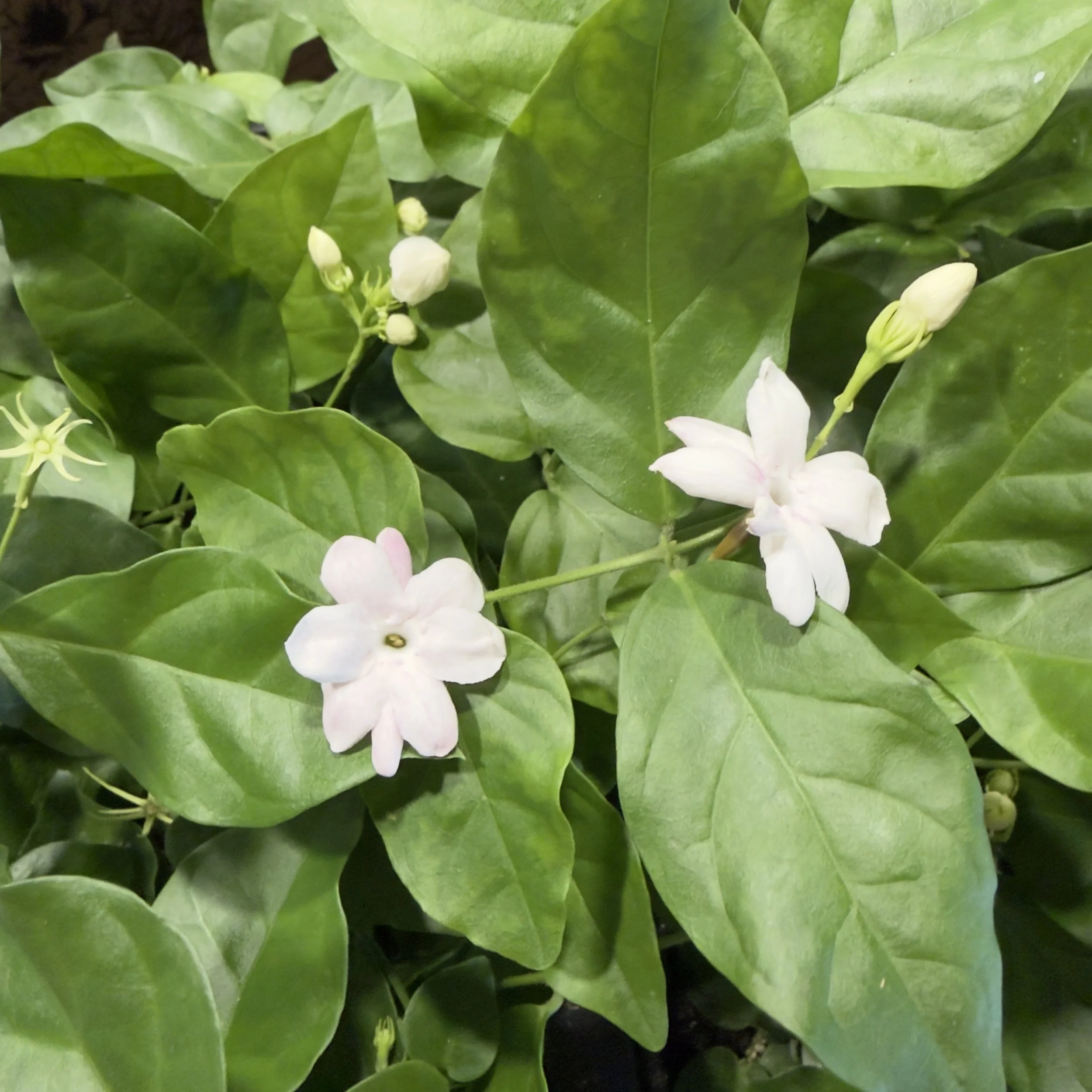
Sweetly fragrant and beautiful, Arabian jasmine is cherished for its glossy green foliage and beautifully scented white blooms. A favourite for as an indoor plant in sunny windows, it brings a touch of the elegance to any home or garden.
Care
Sunlight: Thrives in full sun to partial sun
Water: Keep soil lightly moist, allow the top layer to dry slightly between watering
Temperature: Prefers 18°C–30°C
Planting: Keep indoors
Good to Know
Life Cycle: Perennial in zone 3, often kept as a house plant or as a seasonal patio plant
Size: Sold in 4” pots
Bloom: Late spring to late summer
Pets: May cause mild stomach upset if ingested by pets
Growing: Grows well in containers indoors or on warm patios
Maintenance: Benefits from regular pruning after flowering to encourage bushy growth