

A Field Guide To African Violets
With their soft, velvety leaves and clusters of colourful blooms, African violets are beloved houseplants that have brightened windowsills and kitchen tables for generations. Despite their delicate appearance, they're surprisingly resilient once you understand what they need, rewarding a little patience with flowers that can bloom for much of the year.
Unlike many flowering plants, African violets don't rely on a short growing season to put on their vivid bloom show. Given the right conditions, they can bloom again and again, bringing pops of colour indoors no matter the season!
African violets are a reminder that gardening doesn't have to stop once winter arrives. Even on the coldest days, a flowering houseplant can keep us connected to the joy of growing even when we can’t get outside!
Let's take a closer look at one of the world's most popular houseplants.
Quick Care Guide
Just looking for the basics? Here's the short version.
Growing Information
Light: Full sun to partial shade or bright, indirect light
Water: Water only when the surface of the soil is dry
Soil: Light, well-draining African violet potting mix
Temperature: Prefer 18°C–24°C.
Planting: Best grown indoors year-round in Zone 3a
Bloom: Can flower throughout the year
Life Cycle: Tropical indoor perennial in Zone 3
Pet Friendly: Generally considered non-toxic to dogs and cats
Tip: Water the soil rather than the leaves to help prevent spotting and rot.
African violets are excellent houseplants for bright windows, offices, and anyone looking for long-lasting indoor blooms.
If you're looking for a deeper dive, keep reading below.
Growing African Violets in Zone 3
African violets are tropical plants, making them ideal companions for indoor gardening in Northern Alberta.
With consistent light, warmth, and humidity, they can thrive indoors for many years!
Sunlight
African violets grow best in:
Bright, indirect light
East or north facing windows
Supplemental grow lights during darker winter months
Too much direct sun can scorch the leaves, while too little light often results in fewer flowers.
Soil
African violets prefer soil that is:
Light and airy
Well-draining
Rich in organic matter
Slightly acidic
A dedicated African violet potting mix is often the easiest way to provide the right balance of drainage and moisture retention.
Watering
African violets like evenly moist soil but dislike sitting in water.
For best results:
Water when the top layer of soil feels dry
Avoid allowing the pot to sit in standing water
Water the soil instead of the leaves whenever possible
Many growers prefer bottom watering, allowing the plant to absorb moisture through the drainage holes before removing any excess water.
Maintenance
Humidity
Like many tropical plants, African violets appreciate moderate humidity.
If your home becomes very dry during winter, placing plants near other houseplants or using a humidifier can help support healthy growth.
Fertilizing
If fertilizer in needed during active growth, feed regularly with a balanced fertilizer formulated for flowering houseplants or African violets.
Light, consistent feeding generally produces better results than occasional heavy applications.
Repotting
African violets prefer to be slightly rootbound and typically only need repotting every year or two.
Choose a pot only slightly larger than the existing root ball to encourage continued flowering.
African Violets in the Home
While African violets don't contribute directly to outdoor ecosystems in Northern Alberta, they remind us that our connection with plants doesn't end when we come indoors.
Growing houseplants encourages observation, patience, and appreciation for the natural world all year long.
Bringing Nature Indoors
Houseplants help create living spaces that feel calmer, greener, and more connected to nature.
Even a single flowering plant on a windowsill can brighten a room and encourage us to notice the changing seasons beyond the glass.
Gardening All Year
For us northern gardeners, winter can feel long. African violets help remind us that there's always something growing even when the snow hasn’t let up and we’re heading into May.
Caring for indoor plants helps keep our gardening skills sharp while providing beauty during months when outdoor gardens are resting beneath the snow.
Small Plants, Lasting Joy
One of the things we hear most often at markets is how African violets remind people of someone they loved.
Whether it was a grandmother with a sunny windowsill full of blooms, a parent who carefully tended them each week, or a neighbour who always had one flowering on the kitchen table, these little plants seem to carry a remarkable number of cherished memories.
African violets rarely become large plants, but they often become lifelong companions.
Many are passed between family members as divisions or leaf cuttings, carrying stories, traditions, and memories from one generation to the next.
Sometimes the plants that mean the most aren't the biggest or the rarest. They're the ones that lovingly share our homes for years, becoming part of our everyday lives and the memories we create within them.
Growing with Nature
One of the things we appreciate most about houseplants is how they help us notice little changes.
A new flower bud, a fresh leaf, or the simple rhythm of weekly care reminds us that growth rarely happens all at once. African violets lesson for us is patience.
They reward consistency more than perfection, and in many ways, that's true of gardening as a whole.
For the Curious Gardener
One of our favourite things about plants is that there's always more to discover!
Here are a few fascinating facts, bits of history, and pieces of plant science that make African violets even more interesting.
They're Not Actually Violets
Despite their common name, African violets aren't closely related to true violets (Viola species).
They belong to an entirely different plant family and simply earned their common name because their flowers resemble woodland violets.
Where Do They Come From?
African violets are native to the cloud forests of eastern Africa, where they naturally grow among rocks and shaded cliffs under warm, humid conditions.
Their natural habitat explains why they prefer filtered light instead of direct sun.
Can You Grow One from a Leaf?
Yes! African violets are famous for their ability to grow entirely new plants from a single healthy leaf.
This makes them one of the easiest houseplants to propagate and share with friends and family.
Why Are the Leaves Fuzzy?
The tiny hairs covering African violet leaves help regulate moisture and protect the plant in its native habitat.
They also give the plant its distinctive soft, velvety appearance.
Closing Notes
African violets have been brightening homes for generations, and it's easy to understand why.
They don't need a large garden or a sunny flower bed to make an impact. A small pot on a windowsill or table is often enough to bring colour, life, and a little joy into a room.
We love that they remind us gardening isn't limited to the growing season. Even in the middle of winter in Northern Alberta, there's still something blooming, growing, and new to discover!
For such a small plant, African violets have a remarkable way of making a house feel a little more like home.
And we think every windowsill could use one.
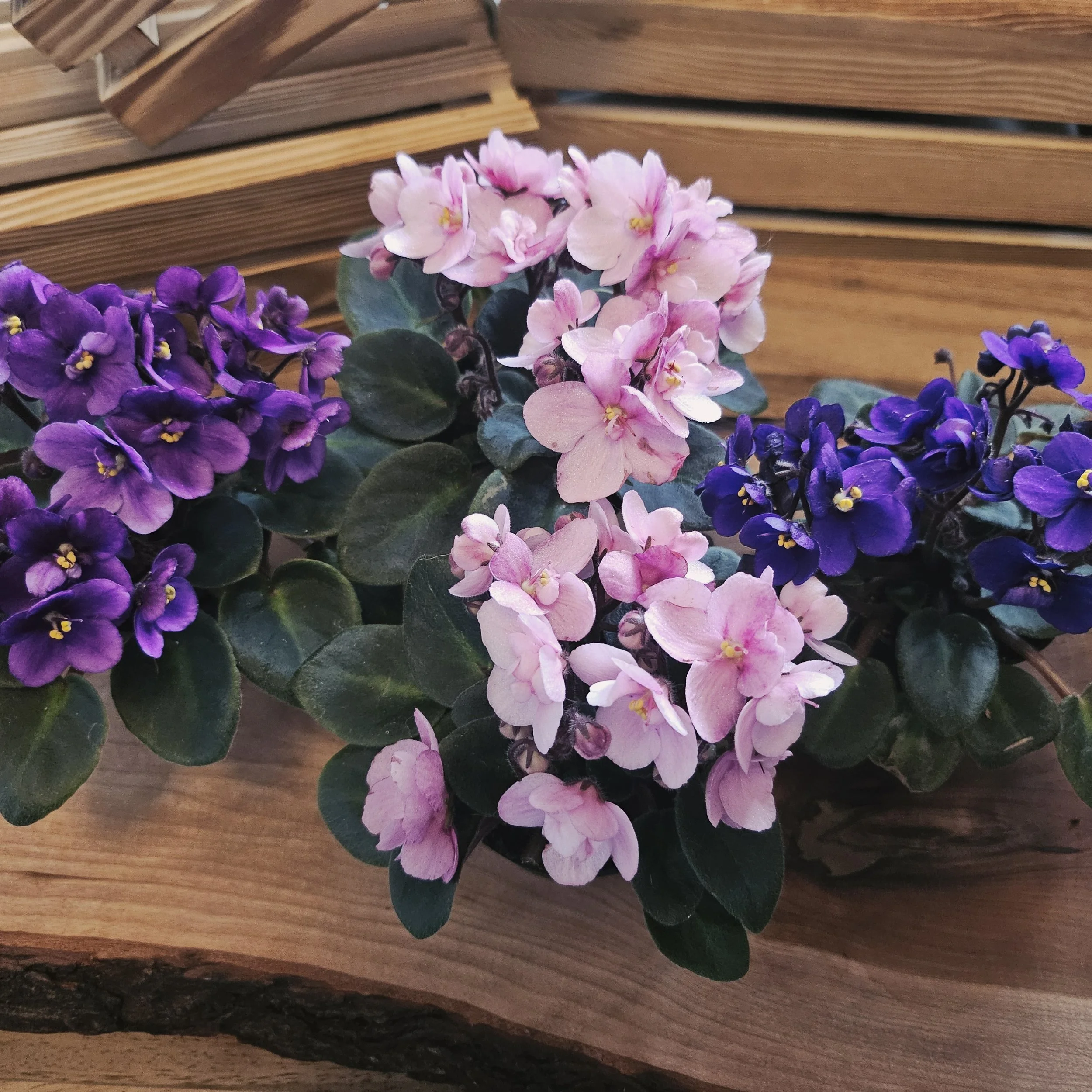
African Violets are a classic semi-succulent houseplant loved for their soft leaves and consistent blooms. Known for flowering reliably indoors, they bring colour to any space in shades of purple, pink, and white. Compact and easy to care for, they’re a great choice for windowsills, desks, or small spaces.
Care
Sunlight: Thrives in full sun
Water: Water when soil feels dry
Temperature: Prefers 18°C–26°C
Good to Know
Size: Sold in a 2” and 4” pot
Bloom: Can bloom year-round with proper care
Pets: Generally considered non-toxic to pets
Growing: Best suited for indoor growing in pots
Maintenance: Benefits from removing spent blooms and keeping leaves clean