
A Field Guide To English Daisies
Some flowers make a statement, others cute daintiness win people over and of course the adorable little english daisy belong firmly in the second category!
Thanks to their cheerful cartoonish blooms, and their wild appearance, english daisies have been loved by gardeners for centuries! Though small in stature, they show off an undeniable charm and are often among the first flowers to bloom in spring!
English daisies are a reminder that beauty doesn't have to be bold to be memorable. Their simple blooms invite people to slow down, look closer, and appreciate the details!
Let's take a closer look at one of the garden's most beloved little flowers.
Quick Care Guide
Just looking for the basics? Here's the short version.
Growing Information
Light: Full sun to partial shade
Water: Keep soil consistently moist but not waterlogged.
Soil: Rich, well-draining soil
Temperature: Prefer cooler growing conditions between 5°C–20°C.
Planting: Plant outdoors as soon as the soil can be worked in spring
Bloom: Spring through early summer, often reblooming in fall
Life Cycle: Perennial in Zone 3, however due to inconsistent winters they are sometimes treated as bi-annuals
Pet Friendly: Generally considered non-toxic to dogs but can cause gastro upset in cats.
Tip: Remove spent blooms regularly to encourage continued flowering
English daisies are excellent choices for containers, borders, cottage gardens, and cool-season colour. Their compact size and early blooms make them especially valuable in northern gardens.
If you're looking for a deeper dive, keep reading below.
Growing English Daisies in Zone 3
English daisies thrive in the cool temperatures that often define spring in Northern Alberta.
Unlike many summer annuals, they prefer mild weather and can struggle during periods of intense heat. This makes them ideal for early-season containers, borders, and mixed plantings where they can shine before the hottest days of summer arrive.
Sunlight
English daisies grow best in:
Full sun during spring
Partial shade during warmer weather
Bright locations with good air circulation
In cooler northern climates, full sun is often ideal early in the season. As temperatures rise, a little afternoon shade can help extend flowering.
Soil
English daisies prefer soil that is:
Rich in organic matter
Well-draining
Consistently moist
Slightly acidic to neutral
Adding compost before planting helps improve both soil structure and moisture retention.
Watering
English daisies appreciate consistent moisture and generally dislike drying out completely.
For best results:
Water when the top layer of soil begins to dry
Avoid soggy soil
Monitor containers closely during warm weather
Maintenance
Regular deadheading encourages additional blooms and helps keep plants looking tidy.
Benefits include:
Longer flowering periods
More blooms
Improved appearance
Reduced self-seeding
If plants begin to fade during summer heat, trimming back old flowers and foliage may encourage fresh growth when cooler temperatures return.
Starting English Daisies From Seed
English daisies can be grown from seed, though they develop more slowly than many annual flowers.
For Zone 3a gardeners:
Start seeds indoors 8–10 weeks before your last frost date
Keep soil consistently moist
Provide bright light after germination
Seeds typically germinate within 10–20 days.
Overwintering
English daisies are technically perennials and may survive winter in Zone 3a with good snow cover and favourable conditions. However, winter survival can be inconsistent, particularly during winters with little snow, repeated freeze-thaw cycles, or exposed planting locations. Many northern gardeners grow them as bi-annuals and replace plants every few years as needed.
Violas in the Ecosystem
Though often grown for their cheerful petals, english daisies can also play a valuable role in supporting garden biodiversity.
Their early blooms provide food for pollinators when floral resources are still limited, helping bridge the gap between winter and the abundance of summer flowers.
Supporting Early Pollinators
English daisies attract a variety of beneficial insects, including:
Small native bees
Hoverflies
Beetles
Early-season pollinators
Their open flower structure makes nectar and pollen relatively accessible, particularly for smaller insects.
Every flower blooming in spring helps contribute to a healthier and more resilient garden ecosystem.
English Daisies in a Wildlife-Friendly Garden
While English daisies are not native to Alberta, they can still contribute to pollinator-friendly gardens.
Their long history of cultivation, compact growth habit, and early blooms make them useful additions alongside native plants and other wildlife-supporting flowers.
Like many garden ornamentals, they are most beneficial when grown as part of a diverse planting that offers food and habitat throughout the growing season.
Native Relatives
English daisies belong to the Asteraceae family, one of the largest plant families on Earth.
Alberta is home to many native members of this family, including asters, fleabanes, blanketflowers, goldenrods, and prairie coneflowers.
These native species provide important food sources for pollinators and contribute to healthy prairie ecosystems throughout the province.
Learning about familiar garden flowers like english daisies often opens the door to discovering the incredible diversity of native plants growing in our own backyards and natural spaces.
Small Flowers, Big Impact
It's easy to overlook flowers as small as english daisies.
Yet some of the most valuable plants in a garden aren't necessarily the tallest or most dramatic. A patch of daisies can provide nectar, attract pollinators, brighten a landscape, and encourage people to spend more time outdoors observing the natural world around them.
Sometimes the smallest flowers leave the biggest impression!
Growing with Nature
One of the things we love most about english daisies is how they encourage us to slow down. They're not flashy flowers. They don't tower over the garden or demand attention from across the yard. Instead, they reward a closer look.
Gardening teaches us to notice moments like a bee visiting a bloom, a flower opening with the morning sun, or a cluster of daisies brightening a cool spring afternoon. These are all much needed reminders that beauty often lives in the small details.
For us, that quiet sense of connection is one of the most rewarding parts of growing flowers!
For the Curious Gardener
One of our favourite things about plants is that there's always more to discover!
Here are a few fascinating facts, bits of history, and pieces of plant science that make english daisies even more interesting.
Daisies Through History
English daisies have been cultivated for centuries and have appeared in gardens across Europe since the Middle Ages.
Over time, gardeners selectively bred plants for larger blooms, fuller petals, and a wider range of colours, giving rise to the charming pom-pom varieties we know today.
Why Are They Called Daisies?
The word "daisy" comes from the Old English phrase "day's eye."
People noticed that the flowers opened during the day and closed again at night, appearing to follow the rhythm of the sun.
Over time, "day's eye" gradually became "daisy."
Why Do They Close at Night?
As mentioned above english daisy flowers often close during the evening and reopen with daylight.
This movement, known as nyctinasty, helps protect pollen and other delicate flower structures when conditions are less favourable.
Are Daisies One Flower?
Not exactly.
Like sunflowers and many other members of the Aster family, a daisy bloom is actually made up of many tiny flowers clustered together.
The center consists of numerous small disk flowers, while the petals around the outside are individual ray flowers.
What appears to be a single bloom is actually an entire community of flowers working together!
Closing Notes
English daisies may never be the biggest flowers in the garden, but that's part of their charm!
They arrive early, bloom generously, support pollinators, and bring a sense of cheerfulness that feels perfectly suited to spring.
We love the way they soften the edges of containers, brighten garden borders, and encourage people to slow down long enough to appreciate the little things.
For a flower so often described as simple, english daisies have a remarkable amount to offer, and we think every garden could use a few more of them!
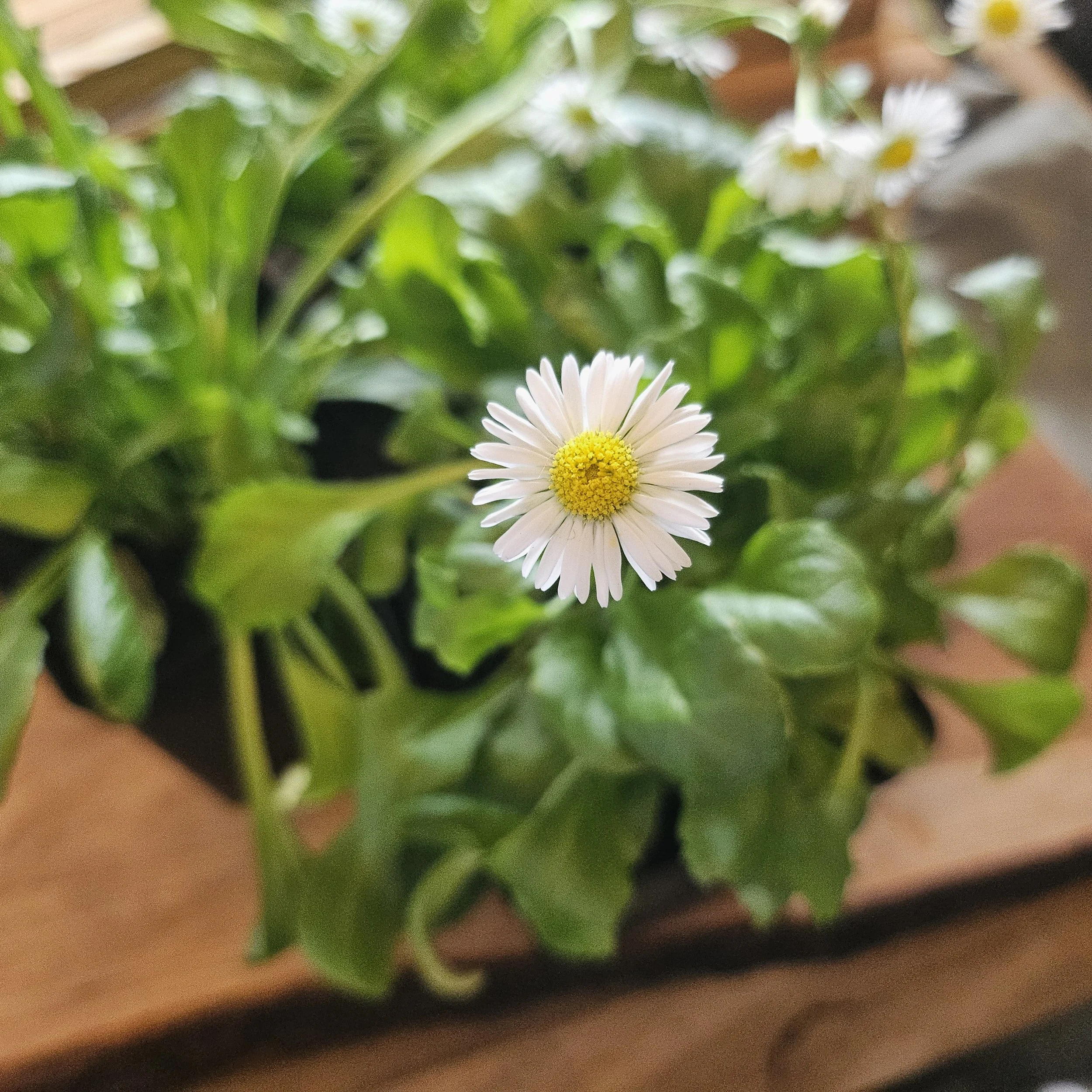
Bellis English Daisies are known for their simple pom-pom blooms in shades of pink, red, and white. They bring a soft, cottage garden feel to beds, borders, and containers. Not only are they easy to grow, they’re also great for attracting early pollinators.
Care
Sunlight: Thrives in full sun to partial shade
Water: Keep soil lightly moist
Temperature: Prefers 5°C–20°C
Planting: Cold-hardy, can be planted outdoors early
Good to Know
Life Cycle: Perennial
Size: Sold in 4” pots
Bloom: Early spring to early summer
Pets: Generally considered non-toxic to pets
Growing: Grows well in both pots and garden beds
Maintenance: Benefits from deadheading to encourage more blooms
Grown from seed with love by the Marigold Market in Lac La Biche, Alberta.