
A Field Guide to Marigolds
It only felt right that the very first entry in our Flower Care Series would be marigolds!
Bright, cheerful, hardy, and surprisingly practical, marigolds are one of the most recognizable garden flowers for good reason. They thrive in containers, garden beds, vegetable plots, and cut flower gardens alike, bringing months of colour while supporting pollinators and beneficial insects throughout the growing season.
For many gardeners, marigolds are one of the first flowers they ever grow. They're forgiving, adaptable, and generous bloomers that ask for very little in return.
For us, marigolds carry an even more special meaning. They inspired the name of our farm and have become a symbol of many of the things we value most: beauty, resilience, pollinator support, and creating welcoming spaces for both people and wildlife.
Let's take a closer look at one of our favourite summer flowers.
Quick Care Guide
Just looking for the basics? Here's the short version.
Growing Information
Light: Full sun
Water: Water when the soil begins to dry
Soil: Well-draining soil
Temperature: Prefer warmer growing conditions between 18°C–30°C
Planting: Plant outdoors after all risk of frost has passed
Bloom: Late spring through fall
Life Cycle: Annual in Zone 3 climates
Pet Friendly: May cause mild stomach upset if ingested
Tip: Regular deadheading encourages continued flowering
Marigolds are one of the easiest flowers to grow and are excellent choices for containers, pollinator gardens, vegetable gardens, and cut flower production.
If you're looking for a deeper dive, keep reading below.
Growing Violas in Zone 3
One of the reasons marigolds remain so popular is their adaptability.
Once established, they tolerate heat, dry periods, and a wide range of growing conditions. Their ability to bloom continuously throughout the summer makes them especially valuable in Northern Alberta gardens where we want every week of the growing season to count.
Sunlight
Marigolds perform best in:
Full sun
Open locations with good airflow
Warm growing conditions
Aim for at least six hours of direct sunlight daily, though more is generally better.
Soil
Marigolds prefer soil that is:
Well-draining
Moderately fertile
Neutral to slightly acidic
Loose and airy around the roots
One of the most common mistakes gardeners make is planting marigolds in overly rich soil. Excess nitrogen can encourage lush foliage at the expense of flowers.
Watering
Young plants benefit from consistent watering while establishing roots. Once established, marigolds become surprisingly drought tolerant.
For best results:
Water deeply when needed
Allow the soil surface to dry slightly between waterings
Avoid constantly wet soil
Container-grown plants may require more frequent watering during hot weather.
Maintenance
Deadheading spent blooms encourages continued flowering throughout the season.
Benefits include:
More blooms
Longer flowering periods
Tidier plants
Reduced seed production
For taller varieties grown as cut flowers, regular harvesting often provides the same benefit.
Starting Marigolds From Seed
Marigolds are one of the easiest flowers to start from seed.
For Zone 3 gardeners:
Start indoors 4–6 weeks before your last frost date
Provide bright light after germination
Keep soil evenly moist
Seeds typically germinate within 5–10 days.
Overwintering
Marigolds are annuals in our climate and do not survive winter outdoors.
Most gardeners simply save seed at the end of the season and start fresh plants the following spring.
Marigolds in the Ecosystem
Beyond their bright blooms, marigolds contribute to the health and diversity of the garden ecosystem in ways many gardeners don't realize.
Their long flowering season, accessible blooms, and ability to attract beneficial insects make them valuable additions to pollinator gardens, vegetable gardens, and wildlife-friendly landscapes.
Supporting Pollinators
Marigolds attract a wide variety of pollinating insects throughout the growing season, including:
Bees
Hoverflies
Butterflies
Beetles
Other beneficial insects
Because marigolds bloom continuously from summer until frost, they can provide a reliable source of nectar and pollen long after many spring flowers have finished blooming.
Every flower blooming in late summer helps support pollinators preparing for the changing seasons ahead.
Marigolds in a Wildlife-Friendly Garden
While marigolds are not native to Alberta, they can still contribute to a healthy and diverse garden ecosystem.
Their bright flowers attract pollinators, while their dense growth habit can provide shelter for beneficial insects. They pair particularly well with vegetable gardens, pollinator plantings, and mixed flower beds where a variety of blooms helps support wildlife throughout the season.
Like many introduced ornamentals, marigolds are most valuable when used alongside native plants and other pollinator-friendly flowers.
Companion Planting
Few flowers have earned a stronger reputation as companion plants than marigolds.
For generations, gardeners have planted them alongside vegetables and herbs in the belief that they help reduce pest pressure and improve overall garden health.
While some companion planting claims have become somewhat exaggerated over time, marigolds absolutely contribute to a more diverse ecosystem by attracting beneficial insects and increasing floral diversity within the garden.
They're commonly grown alongside:
Tomatoes
Peppers
Cucumbers
Squash
Beans
Herbs
Whether grown for pest management, pollinator support, or simply their cheerful blooms, marigolds have earned their place in the vegetable garden.
Native Relatives
Marigolds themselves are native to Mexico and Central America rather than Alberta, but they share many ecological roles with native prairie flowers.
Plants such as asters, goldenrod, yarrow, blanketflower, and prairie coneflower provide similar benefits by supporting pollinators and helping create diverse flowering landscapes.
Learning about marigolds often opens the door to exploring the incredible native wildflowers that share our local ecosystems.
More Than Just a Pretty Flower
Marigolds are often grown for their colour, but they also help create gardens that are alive with activity.
A patch of marigolds quickly becomes a gathering place for bees, hoverflies, butterflies, and other insects. Their long bloom period helps ensure there is always something happening in the garden, even during the hottest parts of summer.
In many ways, marigolds remind us that beautiful gardens and ecologically supportive gardens do not have to be separate things.
Growing with Nature
One of the things we appreciate most about marigolds is how much life they attract.
Spend a few minutes watching a patch of marigolds on a warm summer afternoon and you'll likely notice bees moving from bloom to bloom, hoverflies searching for nectar, and countless small interactions taking place among the flowers.
Gardening encourages us to slow down and pay attention.
It helps us notice seasonal changes, weather patterns, wildlife activity, and the many relationships that exist within a healthy ecosystem.
For us, that connection is one of the most rewarding parts of growing flowers.
For the Curious Gardener
One of our favourite things about plants is that there's always more to discover!
Here are a few fascinating facts, bits of history, and pieces of plant science that make violas even more interesting.
Marigolds Through History
Marigolds have been cultivated for centuries and hold cultural significance throughout much of the world.
In Mexico, marigolds are closely associated with Día de los Muertos (Day of the Dead), where their bright flowers are used in celebrations of remembrance and family.
Across different cultures, marigolds have been associated with warmth, creativity, remembrance, protection, and the sun.
Why Do Marigolds Smell So Strong?
That distinctive marigold scent comes from natural compounds produced throughout the plant's leaves and flowers.
While some gardeners love the smell and others don't, those compounds may help explain why marigolds have developed such a strong reputation in companion planting and pest management discussions.
The scent is one of the plant's natural defense mechanisms.
Are Marigolds Good Cut Flowers?
Many people are surprised to learn that some marigolds make excellent cut flowers.
While compact bedding varieties are often grown for containers and borders, taller African marigolds and specialty cut-flower varieties produce strong stems and long-lasting blooms that add warmth and texture to bouquets.
They're especially valuable during the height of summer when bright colours are in high demand.
Not All Marigolds Are the Same
The word "marigold" actually refers to several different groups of plants within the Tagetes genus.
The three most common are:
French Marigolds (Tagetes patula): Compact, bushy plants known for rich colours and excellent container performance.
African Marigolds (Tagetes erecta): Large-flowered plants often grown for landscaping and cut flowers.
Signet Marigolds (Tagetes tenuifolia): Delicate plants with edible flowers, fine foliage, and exceptional pollinator value.
Despite sharing the same name, these groups can look remarkably different from one another.
Can You Eat Marigolds?
Some marigold species are edible.
Signet marigolds are particularly popular for their citrus-like flavour and are sometimes added to salads, desserts, and garnishes.
As with any edible flower, always confirm the species and ensure plants have not been treated with pesticides or other chemicals before consuming them.
Closing Notes
Honestly, marigolds just make people happy!
We see it all the time at markets. Someone spots a tray of marigolds, smiles, and immediately begins telling us about the marigolds they grew with a parent, grandparent, or in their first garden.
They're a flower that connect people with memories.
We love that they're approachable for beginners, easy to grow, pollinator-friendly, and incredibly reliable. They thrive in challenging conditions, bloom for months, and bring warmth and colour wherever they're planted.
Most of all, we love what they represent: the idea that beauty, resilience, and practicality can all exist in the same plant.
For a flower that is often considered simple, marigolds have an incredible amount to offer.
And we think every garden could use a few more of them!
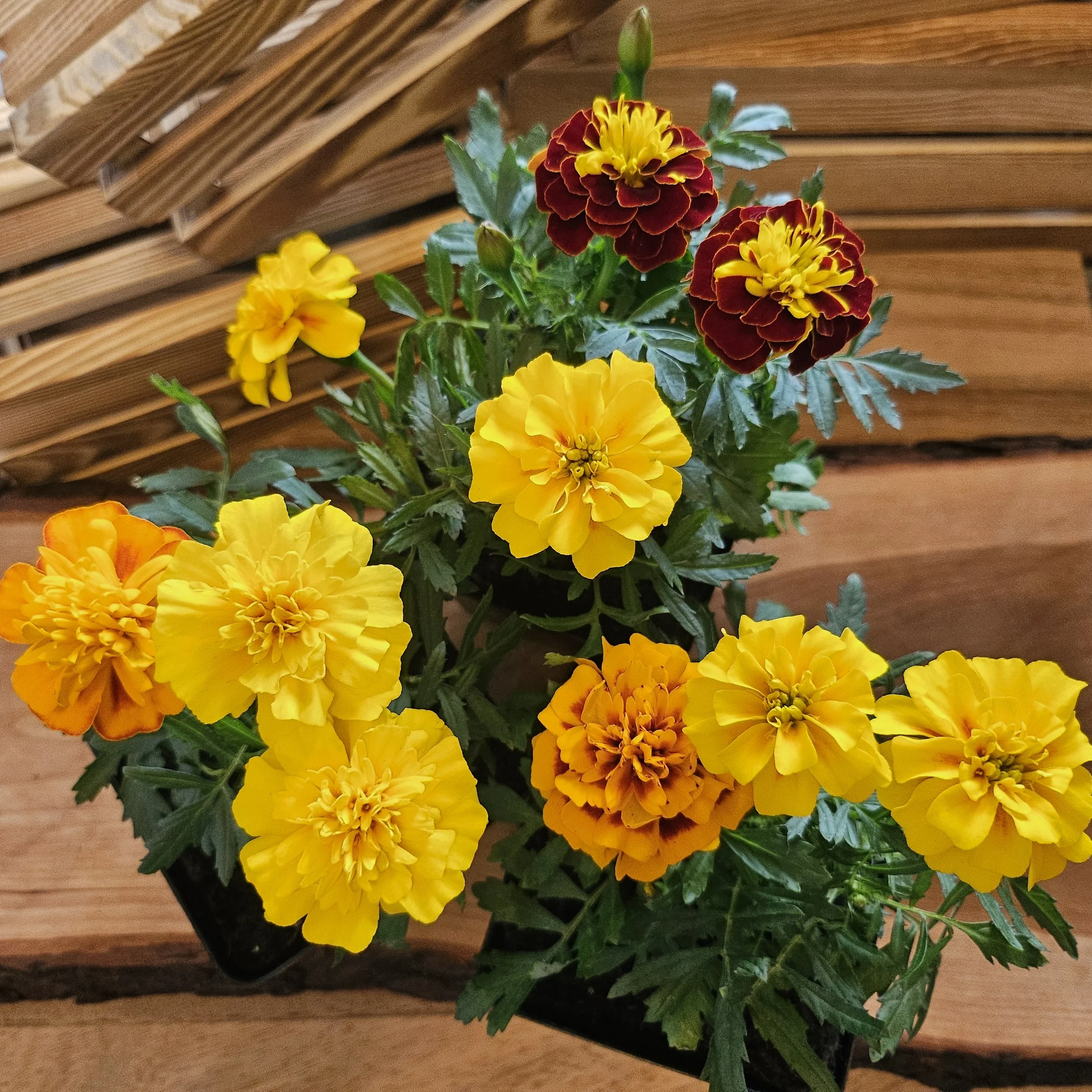
Call us biased but we love marigolds!
Bright and cheerful marigolds are one of the easiest flowers to grow and are a must in summer gardens. Not only are they known for their warm tones and distinctive scent, they’re also a practical choice as they are often used to help deter pests and attract beneficial insects and pollinators!
Care
Sunlight: Thrives in full sun
Water: Water when soil feels dry
Temperature: Prefers 18°C–30°C
Planting: Plant outdoors after last frost
Good to Know
Life Cycle: Annual
Size: Sold in 3.5” pots
Bloom: From late spring to early fall
Pets: May cause mild stomach upset if ingested by pets
Growing: Grows well in both pots and garden beds
Maintenance: Benefits from deadheading to encourage more blooms
Grown from seed with love by the Marigold Market in Lac La Biche, Alberta.