
A Field Guide To Violas
Few flowers work harder in a northern garden than violas!
They have cheerful blooms, remarkable cold tolerance, and the ability to flower long before many summer annuals. It's no wonder violas are a favourite of gardeners around the world! They bring colour when gardens are just waking up from winter, support early pollinators, and thrive in containers, borders, and garden beds alike.
For us, violas are one of the flowers that signal the start of the growing season. After a long northern winter, those first colourful blooms feel like a welcome reminder that spring has finally arrived!
Let's take a closer look at one of our favourite cold hardy flowers.
Quick Care Guide
Just looking for the basics? Here's the short version.
Growing Information
Light: Full sun to partial shade
Water: Keep soil consistently moist but not waterlogged.
Soil: Rich, well-draining soil
Temperature: Prefer cooler growing conditions between 5°C–20°C.
Planting: Plant outdoors as soon as the soil can be worked in spring
Bloom: Spring through fall
Life Cycle: Annual in Zone 3 climates
Pet Friendly: Generally considered non-toxic to cats and dogs.
Tip: Regular deadheading helps encourage continuous blooming.
Violas are among the easiest cool-season flowers to grow and are excellent choices for containers, borders, pollinator gardens, and edible flower gardens.
If you're looking for a deeper dive, keep reading below.
Growing Violas in Zone 3
One of the reasons violas are so beloved across Canada is their ability to thrive in cooler temperatures.
Unlike heat-loving flowers such as marigolds or zinnias, violas often perform their best during spring and fall, making them particularly valuable in Northern Alberta gardens.
Sunlight
Violas grow best in:
Full sun during spring
Partial afternoon shade during summer
Bright locations with good air circulation
In Northern Alberta, full sun is often ideal for much of the growing season, though a little afternoon shade can help extend flowering during hot summer weather.
Soil
Violas grow best in soil that is:
Rich in organic matter
Well-draining
Consistently moist
Slightly acidic to neutral
Adding compost before planting can improve both moisture retention and soil health.
Watering
Violas prefer even moisture and generally don't enjoy drying out completely.
For best results:
Water when the top layer of soil begins to dry
Avoid waterlogged soil
Pay close attention to containers during hot weather
Maintenance
Removing spent flowers encourages plants to continue blooming rather than shifting energy into seed production.
Benefits include:
More flowers
Longer bloom periods
Tidier plants
Improved appearance
If plants become leggy during summer heat, a light trim can often encourage fresh growth and renewed blooming.
Starting Violas From Seed
Violas can be grown from seed, though they are slower to develop than many annual flowers.
For Zone 3a gardeners:
Start indoors 10–12 weeks before your last expected frost
Maintain consistent moisture
Provide ample light after germination
Seeds typically germinate within 7–21 days.
Overwintering
Most bedding violas are grown as annuals in our climate.
Some perennial species may survive milder winters with reliable snow cover, but most gardeners simply replant each spring or allow plants to self-seed where conditions allow.
Violas in the Ecosystem
Beyond their beauty, violas contribute to the health and diversity of the garden ecosystem.
Their value goes far beyond what we see on the surface.
Supporting Early Pollinators
One of the greatest strengths of violas is their timing! Because they bloom during cool spring weather, they can provide nectar and pollen at a time when relatively few flowers are available.
This can be especially important for:
Emerging bumble bee queens
Small native bees
Hoverflies
Early-season butterflies
Every flower blooming in spring helps contribute to a stronger, more resilient ecosystem.
Violas in a Wildlife-Friendly Garden
While many violas grown in gardens are not native to Alberta, they can still play an important role in supporting wildlife.
We often think of pollinator gardens as collections of native plants, and native species should absolutely be prioritized whenever possible. However, thoughtfully chosen garden plants can also help extend bloom periods and provide additional food sources throughout the growing season.
We believe healthy gardens are often built on a combination of native plants and wildlife-friendly, introduced ornamentals working together.
Native Relatives
While most bedding violas sold in garden centres are cultivated varieties, Alberta is home to several native violet species that play important ecological roles throughout forests, meadows, and wetlands.
These native violets provide food and habitat for a variety of insects and wildlife, including certain fritillary butterflies whose caterpillars rely on violet species as host plants.
Garden violas and native violets aren't the same plant, but they belong to the same fascinating family. Learning about one often leads gardeners to discover and appreciate the other.
We believe both native plants and thoughtfully chosen garden flowers have a place in the landscape. Together, they can help create beautiful, diverse gardens that support wildlife throughout the growing season.
Beauty Matters Too
Supporting nature doesn't always have to mean sacrificing beauty!
Flowers like violas help create gardens that people want to spend time in. When people fall in love with their gardens, they often become more interested in pollinators, birds, native plants, and the natural world around them.
Sometimes conservation begins with simply planting a flower you love.
Growing with Nature
One of the things we love most about gardening is that it encourages us to pay attention.
A patch of violas may seem simple at first glance, but spend a few minutes observing and you'll likely notice visiting bees, changing weather patterns, new blooms opening, and the countless small interactions happening around the plant.
Gardens help connect us to the seasons. They remind us when spring arrives, when pollinators emerge, when rainfall is scarce, and when autumn begins to settle in.
For us, that connection is one of the most rewarding parts of growing flowers!
For the Curious Gardener
One of our favourite things about plants is that there's always more to discover!
Here are a few fascinating facts, bits of history, and pieces of plant science that make violas even more interesting.
Violas Through History
Violas have been cultivated for centuries and appear throughout folklore, literature, and traditional gardens around the world.
Historically, they have symbolized faithfulness, humility, love, remembrance, thoughtfulness among many more beautiful things.
Their delicate appearance and heart-shaped leaves helped make them symbols of affection and fond memories in many cultures.
How Are Violas So Cold Hardy?
Violas tolerate cold weather remarkably well compared to many annual flowers.
As temperatures drop, they increase sugar concentrations within their cells. These sugars help protect plant tissues from freezing damage, acting somewhat like a natural antifreeze.
This is why violas can often recover from light frosts that would severely damage marigolds, tomatoes, or basil.
How Do Pollinators See Violas?
Many pollinators can see ultraviolet light, which humans cannot.
To our eyes, a viola may appear to have simple markings, but bees can often see hidden ultraviolet patterns that guide them directly toward nectar and pollen.
What looks beautiful to us may actually function as a landing guide for pollinators.
Are Violas and Pansies the Same Flower?
Not quite.
They both belong to the Viola genus and are closely related, but pansies were bred to produce larger flowers while violas generally produce more blooms per plant.
The line isn't always perfectly clear, and some modern varieties fall somewhere in between.
Can You Eat Violas?
Yes! Viola flowers are edible and are commonly used to:
Decorate cakes
Garnish salads
Create candied flowers
Freeze into decorative ice cubes
Always ensure any flowers intended for consumption have been grown without pesticides or other chemicals.
Closing Notes
There are flowers that demand attention, and then there are flowers that quietly earn a place in your heart. Violas belong firmly in the second category.
People often stop at our tables and lean in closer to admire the intricate patterns and unexpected colour combinations hidden within each bloom. No two seem exactly alike.
We love that they arrive early, bloom generously, support pollinators, and ask for very little in return.
Most of all, we love what they represent: the beginning of another growing season and the reminder that even the smallest flowers can have a meaningful impact.
For a flower often overlooked in favour of larger blooms, they have an incredible amount to offer.
And we think every garden could use a few more of them!
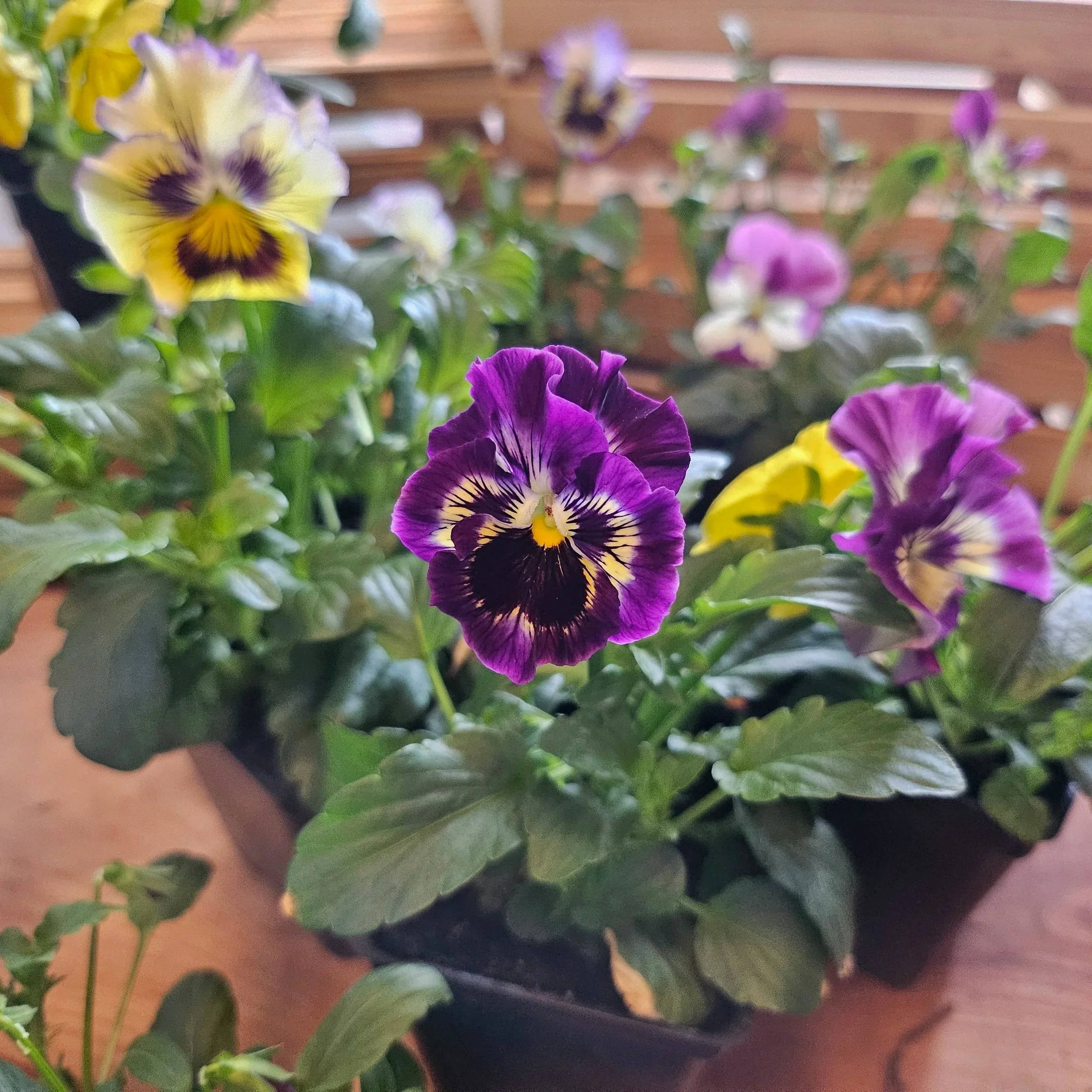
Cheerful violas are a spring favourite known for their bi-colours and delicate petals. Blooming early and often, they add a gentle pop of colour to gardens, containers, and borders early in the season. Not only are they easy to grow, they’re also great for attracting early pollinators.
Care
Sunlight: Thrives in full sun to partial shade
Water: Keep soil lightly moist
Temperature: Prefers 5°C–20°C
Planting: Plant outdoors after last frost
Details
Life Cycle: Perennial in zone 3 with winter protection
Size: Sold in a 3” pot
Bloom: From early spring to late fall
Pets: May cause mild stomach upset if ingested by pets
Growing: Grows well in both pots and garden beds
Maintenance: Benefits from deadheading to encourage continuous blooms
Grown from seed with love by the Marigold Market in Lac La Biche, Alberta.