
A Field Guide To Lewisia Cotyledon
Some plants seem determined to thrive where few others can. Lewisia cotyledon is one of them.
With its rosettes of fleshy evergreen leaves and clusters of vibrant flowers, lewisia cotyledon brings an unexpected splash of colour to containers, rock gardens, and perennial borders. Despite its delicate appearance, it's a remarkably resilient plant that evolved in rocky mountain habitats where soil is scarce, water drains quickly, and conditions can be challenging.
For gardeners, lewisia cotyledon offers something a little different. It doesn't behave quite like a typical perennial, annual, or alpine plant. Instead, it has developed its own unique strategy for surviving in some of North America's most rugged landscapes.
For us, lewisia cotyledon is a plant that always sparks conversation. People are often drawn to the bright blooms first, but stay to learn about the fascinating growing behaviours behind them.
Let's take a closer look at one of our favourite mountain wildflowers.
Quick Care Guide
Just looking for the basics? Here's the short version.
Growing Information
Light: Full sun to partial shade
Water: Allow soil to dry slightly between waterings
Soil: Excellent drainage is essential in either rock or soil gardens
Temperature: Prefer cooler growing conditions between 10°C–24°C.
Planting: Plant outdoors as soon as the soil can be worked in spring
Bloom: Spring through early fall
Life Cycle: Perennial in Zone 3
Pet Friendly: Generally considered non-toxic to dogs and cats
Tip: Avoid allowing water to sit in the center of the leaf rosette.
Lewisia is an excellent choice for rock gardens, containers, raised beds, and areas with excellent drainage.
If you're looking for a deeper dive, keep reading below.
Growing Lewisia Cotyledon in Zone 3
One of the most surprising things about lewisia cotyledon is how well it tolerates cold temperatures.
While its succulent-like leaves may make it look delicate, many Lewisia species evolved in mountainous regions where winters are long and conditions can be harsh.
Sunlight
Lewisia cotyledon grow best in:
Full sun to partial shade
Morning sun with afternoon protection in hotter locations
Bright, open sites with good airflow
In cooler northern climates, full sun is often ideal provided drainage is excellent
Soil
If there's one thing Lewisia cotyledon demands, it's drainage.
It prefers soil that is:
Well-draining
Sandy or gravelly
Low to moderate fertility
Slightly acidic to neutral
Heavy clay soils can be problematic, particularly during winter.
Many gardeners have the greatest success growing Lewisia in raised beds, rock gardens, or containers where drainage can be controlled.
Watering
Lewisia cotyledon dislikes constantly wet conditions.
For best results:
Water deeply but infrequently
Allow soil to dry slightly between waterings
Reduce watering during dormancy
The biggest threat to Lewisia cotyledon is often excess moisture rather than drought.
Maintenance
Lewisia cotyledon is relatively low maintenance.
Removing spent flower stalks can encourage a tidier appearance and may prolong blooming.
Avoid excessive fertilizing, as plants generally perform best in leaner soils.
Overwintering
Lewisia cotyledon is generally hardy in Zone 3a, but winter moisture can be more problematic than winter cold. As mentioned many times already, good drainage is essential!
Plants growing in heavy, wet soils are more likely to suffer winter losses than those growing in rocky or raised sites.
Lewisia Cotyledon in the Ecosystem
Though often grown as an ornamental, Lewisia cotyledon is part of a fascinating mountain ecosystem.
Its blooms provide nectar and pollen for a variety of pollinating insects, particularly during its flowering period in late spring and early summer.
Supporting Pollinators
Lewisia cotyledon flowers attract:
Native bees
Small solitary bees
Hoverflies
Other beneficial insects
Their bright flowers and accessible nectar make them valuable additions to pollinator-friendly gardens.
Lewisia Cotyledon in a Wildlife-Friendly Garden
Lewisia cotyledon may not provide the same abundance of nectar as some larger flowering perennials, but diversity matters.
A healthy garden ecosystem is built from many different species blooming throughout the season.
Lewisia cotyledon contributes to that diversity while bringing unique beauty to the landscape.
Native Relatives
Lewisia cotyledon is native to western North America, particularly mountainous regions of the Pacific Northwest.
While it isn't native to Alberta, it belongs to a remarkable group of plants adapted to life in rocky and challenging habitats.
Closer to home, many Alberta wildflowers share similar adaptations, surviving drought, cold temperatures, and nutrient-poor soils while supporting local pollinators and ecosystems.
Learning about plants like Lewisia often encourages us to look more closely at the resilient wildflowers growing naturally around us.
Built for Tough Places
One of the things we find most inspiring about this hardy little plant is where it naturally grows.
In the wild, many Lewisia species thrive among rocky slopes, cliffs, and mountain outcrops where conditions can seem inhospitable.
Their ability to survive in these environments is a reminder that beauty often emerges in unexpected places.
Growing with Nature
Plants don't always thrive because conditions are easy. Sometimes they thrive because they've adapted to challenges. Lewisia cotyledon is a wonderful reminder of this.
Its ability to flourish in rocky soils, withstand cold winters, and bloom beautifully despite difficult conditions speaks to the resilience found throughout nature.
Gardening often teaches us the same lesson: success isn't always about creating perfect conditions, but about understanding what each plant truly needs.
For the Curious Gardener
One of our favourite things about plants is that there's always more to discover!
Here are a few fascinating facts, bits of history, and pieces of plant science that make lewisia cotyledon even more interesting.
Who Was Lewisia Named After?
Lewisia was named after Meriwether Lewis, the American explorer of the famous Lewis and Clark Expedition.
The plant was first collected and documented during the expedition's journey through western North America.
Is Lewisia a Succulent?
Sort of.
While Lewisia isn't classified as a true succulent in the same way as an echeveria or jade plant, its fleshy leaves store water and help it survive dry conditions.
This adaptation allows it to thrive in rocky environments where moisture may be limited.
Why Are the Bright So Vivid?
In mountain habitats, growing seasons can be short and pollinator visits less predictable.
Bright flowers help attract attention quickly, increasing the chances of successful pollination during the brief flowering season.
What Does "Cotyledon" Mean?
The species name cotyledon refers to a seed leaf, which isan embryonic leaf found within a seed.
Early botanists believed the leaves resembled the shape of cotyledons, leading to the name we still use today.
Closing Notes
Lewisia is hardy little plant that really draws people in. At first glance, it's easy to admire the flowers and move on. But the more you learn about it, the more remarkable it becomes.
A mountain wildflower adapted to rocky slopes, harsh winters, and challenging conditions somehow transforms into one of the most colourful plants in the garden.
We love that combination of toughness and beauty.
For a plant that evolved in some of North America's most rugged landscapes, Lewisia feels perfectly at home brightening a container, rock garden, or front step.
And we think every garden could use a few more of them.
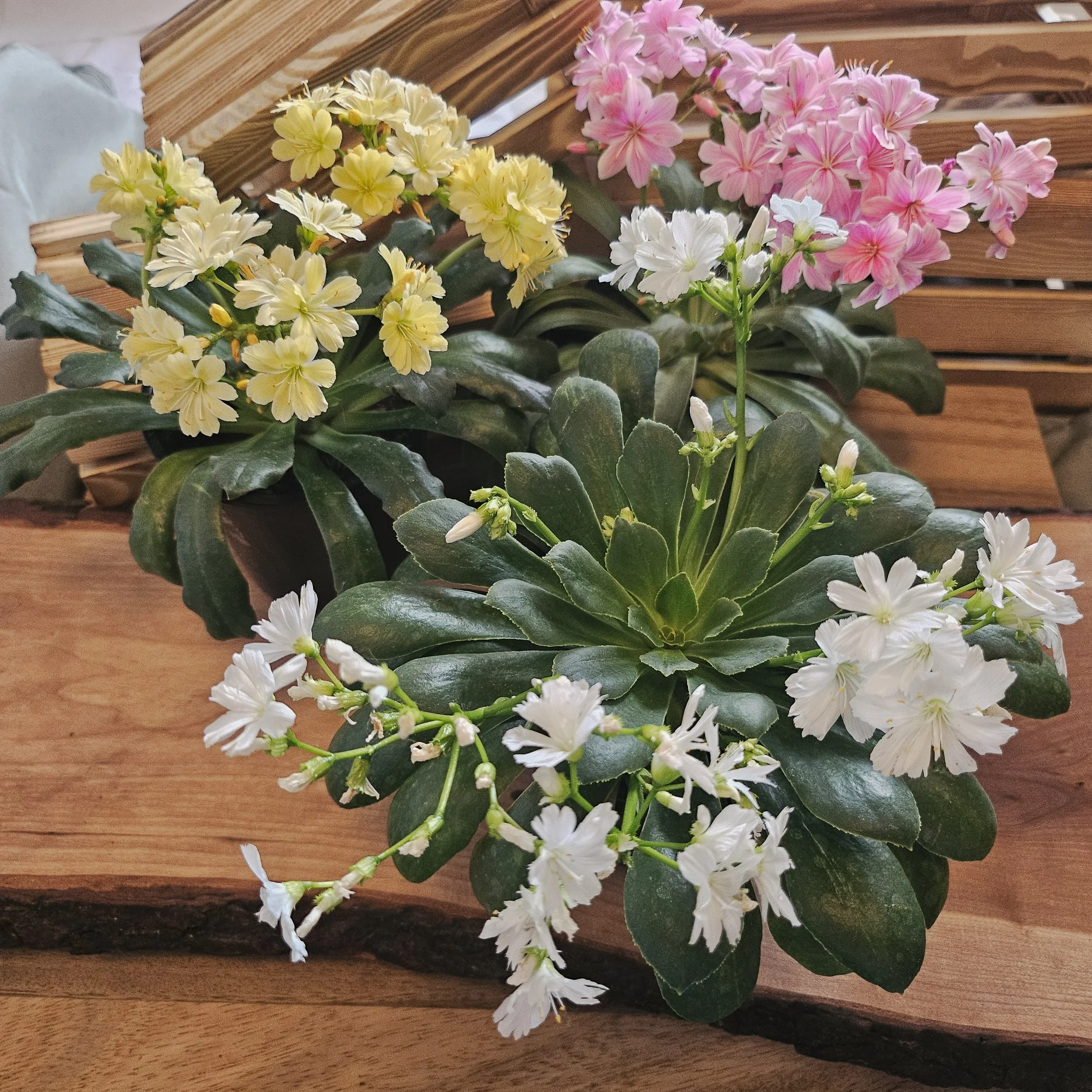
The hardy Lewisia Cotyledon is known for it’s unique star-shaped blooms. Naturally adapted to rocky, mountainous environments, it’s perfectly suited to cooler climates like ours and thrives in well-drained soil. It’s also a great choice for a pop of early-season colour and which can help attract pollinators.
Care
Sunlight: Thrives in full sun to partial shade
Water: Allow soil to dry slightly between watering
Temperature: Prefers 10°C–24°C
Planting: Plant outdoors after last frost
Good to Know
Life Cycle: Perennial
Size: Sold in a 4” pot
Bloom: From late spring to early summer
Pets: Generally considered non-toxic to pets
Growing: Grows well in both pots, rock gardens and garden beds
Maintenance: Quite low-maintenance once it’s established